
Therapy
Are you looking for spiritual growth that manifests in tangible healing?
Some people can clear their heads by venting. Others get relief when distracted from negative emotions. Still others have more self-worth when their therapist accepts or validates them. These all seem helpful because they alleviate symptoms. But they are only the starting points at best, and harmful tangents at worst. They can be harmful because they can forestall either (a) the comforting acceptance that one receives from God, or (b) the godly sorrow that one must have for true repentance. Both are possible only by turning to God and living rightly by Him, as well as leads to more of it.
We believe in the sufficiency of Scripture. Everything we do must be biblical if we are to conform to Christ, and not be distorted by the world. At the same time, Scripture is comprehensive, but not exhaustive. The clarity is in the what (viz., the content). The how it is delivered (viz., the process) manifests differently depending on the context. We will use methods that are empirically-proven because we must love in actions and in truth (I John 3:18). But to be very clear, these evidence-based practices are either directly sourced from Scripture or borrowed capital that a covenantal apologist can clearly and properly ascribe to God as the first practitioner.
Our approach to therapy hearkens back to the Greek meaning: healing (not self-worth or self-actualization). It is multi-dimensional and holistic. Multi-dimensional means that we care for both your body and soul; not just one or part of one of the two. Caring for your body includes helping your brain function properly, so that your mind can be focused on everything good. Caring for your nervous system includes the way that you perceive external stimuli—these are the reflex emotions and actions that are commonly known as the fight or flight response (but also include fawn, faint, etc.). Caring for your soul includes properly aligning your worship to the only One who is true, good, and living. These are all necessary because your body and soul are meant to be aligned. When we do all of them at the same time, our approach is holistic.
* As with all ICCCED-T programs, 100% of revenue is dedicated to the benefit of the common good. This includes (a) supplementing donated funds that are directed to client sponsorships for economic hardships, as well as (b) investing in the non-profit’s ability to serve clients in ever-greater ways through volunteers and staff development funds.
Modalities of Care

Individual
As an individual, you have the full attention and care of a trained professional who will seek you as a saint, sufferer, and sinner (in that order) and work with you on developing a treatment plan that cares for your holistic well-being as an embodied soul (I 61:1-3).
Our differentiator: We work with any and all key caregivers/partners who needs to understand how to help and not hinder momentum (Prov 18:24).

Couple
A couple can be the traditional husband and wife duo, but it can also be parent and child, siblings, friends, or co-workers (Eccl 4:12). Much of couple therapy is focused on understanding one another through better communication.
Our differentiator: We triage the content of the communication (not just the process) and realigning that with God’s communication by listening to Him (Jas 1:19).

Family
A family can be your biological family of origin, the new one that you are establishing, a blended family (particularly useful for those with adopted, step, or foster children), or fictive kinship (those family friends who are considered family) (Deut 6:2-9).
Our differentiator: We identify leverage points (key members able to improve the overall system) and growing their ability to share God’s mercy and grace.

Corporate
Co-laborers often spend more time with one another than with family. Working in a Christian context can generate unexpected conflict contrary to the biblical social contract. This jeopardizes productivity at best and Christ’s reputation at worse (Jas 4:1-12).
Our differentiator: We work with pastors, elders, deacons, and small group leaders as well as parachurch ministry leaders seeking what is not just legal or even right, but loving.
Biblical Therapies
Biblical counseling that relies on the whole counsel of God is non-negotiable. After all, “the Scriptures . . . teach what man is to believe concerning God, and what duty God requires of man” (WSC A.3). And “the Word of God, which is contained in the Scriptures of the Old and New Testaments, is the only rule to direct us how we may glorify and enjoy Him” (WSC A.2). And so, we begin by setting our hearts after God’s purposes (Prov. 19:21).
Then, comes in-session activities or between-session homework realigning our experiences. The young adult strives to learn new ways to cook a steak not just to feed himself (but also neighbors!) tasty yet nutritious food, in order to share in the joy of His provision. The godly husband makes the effort to dance with his wife and sing with his kids everyday, so that God’s children glorify His holy name.
Play, Sandtray,
Virtual World Creations
Conceptualization: Some young men receive visions and some old men receive dreams from God (Acts 2:17). All children of God, through all stages of development , can visualize and materialize what God places in one’s heart.
Treatment: Games, puzzles, and visualizations (digital or imaginary) facilitated through the use of the virtual sandtray app, Roblox, or Minecraft.
Goal: Healing through the fulfillment of one’s cultural mandate (Gen. 1:28). Exercising one’s imagination is key to exploring what is accessible only through a relationship with the God of all creation. When faced with challenges, one can properly attribute and record the miracles made possible and empowered by God.
Creative Arts & Crafts Design and Production
Conceptualization: God is the Creator King. As vassals to His suzerain, we are the creature kings that are commanded to continue His works in His name. We are most like Him when we create.
Treatment: Drawing inspiring scenes that frame one’s existence Coram Deo, making crafts that showcase divine principles, and composing or playing music that tune one’s voice to become an instrument of worship. In-session activities and video programs led by our Creative Arts director Suen Yuet.
Goal: Awareness of God’s blessings. Cultivation of gratitude. The tangible artifacts designed and created are personal ebenezer stones that serve as visual and audible reminders of God’s goodness.
Embodied Soul Experiences
Conceptualization: God created man as an embodied soul. Fractures caused by suffering (caused by oneself or by others) reveal the memories of brokenness inside even when we’ve been recreated anew.
Treatment: Somatic therapist Suen Peng leads counselees through acrobatics, dance, and kung fu martial arts in order to experience God’s natural revelation (to complement His special revelation).
Goal: Healing through activating one’s internal systems and external body under the direction of the Holy Spirit. Only God can give us the eyes to see and ears to hear his heavenly wisdom (cf. Eph 1:17-18). When we realize this, we can receive His gifts (cf. Prov 20:12).
Bibliotherapy and Written/Spoken Word
Conceptualization: God communicates with us through His written Word. He tells us to sing psalms, hymns, and spiritual songs. He commands us to sing audibly.
Treatment: Narrative therapy, poetry/lyrics composition, and contemplative prayer orchestrated by Dr. Ronnie Eng.
Goal: Confirmation of God’s truth by oral and written catechesis. In-real-time responses, echoing what God says about any/all areas of life, are necessary to participate in live conversation with one’s Lord. Contemplative dialogue is essential to building a relationship with rumination of God’s Word, consideration of how one comes across to God, and an active patience and perseverance waiting upon God.
Manifestations of One's Spirit
As embodied souls, much of what is tangible is experienced through the physical aspects of our beings. This comprises a messy mix of volition, cognition, emotion, and interoception which changes at every moment based on the position of our inner souls. Soul care, therefore requires addressing these manifestations in order to be aligned with God the Spirit (cf. Rom 8:16).
Volition
Conceptualization: We are designed to worship. The object of our worship inspires us to action. When we are attracted to a false idol, we will move in the wrong direction. When we are confused by the plethora of false idols, we are left to inaction.
Treatment: We will explore your best allegiances and contrast them with your worst adversaries: first through motivational interviewing, then mentalization, and finally, behavioral rehearsal (cf. Luke 14:26-33).
Goal: Only when we worship the One True, Living God, can we have any hope for fulfilling our purpose in the face of unsurmountable odds (cf. 1 John 3:18-24).
Cognition
Conceptualization: We were given minds to think and reason. However, the cacophony of voices that beckon us today are worse than the mythical siren song. Whether it is people we know or random influencers, we cannot know ourselves and others in accurate ways without understanding God’s truth rightly.
Treatment: We will develop the mind of Christ through identification of cognitive errors, replacing them with them with sound doctrine, and asking the Spirit to illuminate the best paths at the forks in the road (cf. Jer 10:23-24).
Goal: Only God can give us the eyes to see and ears to hear his heavenly wisdom (cf. Eph 1:17-18). When we realize this, we can receive His gifts (cf. Prov 20:12).
Emotion
Conceptualization: Emotions are important because they are felt deeply and speak loudly. Unfortunately, too many are led to believe that they are determinative. While there are many theories, there is no panacea to cure, let alone a surefire way to understand what is triggering the emotion and what it means.
Treatment: We will experience the emotions that you and others (especially God), understand the contexts in which they first surfaced, and determine the meaning and resulting implications that lead to fulfillment of God’s purpose for you (cf. Eph 4:26-27, 30-32).
Goal: How we feel about God is directly correlated to how we feel about the caregivers in our lives. Attachment to those made in the image of God can be helpful towards strengthening one’s attachment to God when they act congruently in union with Christ (John 14:20; 15:4-7).
Interoception
Conceptualization: We instinctively experience life in our bodies. Yet, our bodily sensations are often misinterpreted because different situations can be experienced in similar ways. For example, feeling nervous about a test can be confused with feeling excited about going on a first date. Both have higher heart rates and sweaty palms.; but have entirely different meanings.
Treatment: We will scan for physiological indicators of both stress and eustress; in the external body as well as internally within the autonomic nervous system. We will then shift to a state of safety and security through co-regulation with other members of the body of Christ by the Holy Spirit. This will be facilitated through exercises designed to activate the ventral vagal nerve, and down-regulate the sympathetic nervous system and the dorsal vagal complex.
Goal: Reciprocity of one’s spirit and the Holy Spirit, augmented by awareness of other members of the body of Christ (1 Cor 12:12ff). Neuroception (one’s sense of safety vs. danger) that is enhanced through attunement to the reality of life lived coram Deo (in God’s presence).
Books Curated / Reviewed by ICCCED-T
We are honored to curate and review many books published by our partners (e.g., New Growth Press, Reformed Heritage Books, InterVarsity Press).
Whether you are on the certification journey or part of our book club, we pray these resources will be a boon to you.
To support your Christ-conforming educational process, we humbly offer:
- objective commentary on how the interpretations of well-respected theologians align with the Spirit-superintended words of the Holy Bible, and
- subjective suggestions as to where these perspectives can be extended or adjusted for the contemporary, private ministry setting.

Precious Remedies Against Satan’s Devices (Brooks)
‘Christ, the Scripture, your own hearts, and Satan’s devices, are the four prime things that should be first and most studied and searched…’
A detailed analysis of Scripture together with the malfunctions, diseases, and spiritual cares of members of the body of Christ.

The Christian in Complete Armour (Gurnall)
‘Gurnall’s work is peerless and priceless; every line is full of wisdom; every sentence is suggestive. The whole book has been preached over scores of times, and is, in our judgment, the best thought-breeder in all our library.’ — C.H. SPURGEON

Plans for Holy War: How the Spiritual Soldier Fights, Conquers, and Triumphs (Arrowsmith)
Puritan John Arrowsmith paints Christianity as the battle between the seed of the woman and the serpent. This book explores themes of military duty, battle against the evil one, and the Christian’s victory and triumph in the Scriptures and classical writings; with depth of research, insistence that our warfare is chiefly theological, and blending of polemical and pastoral theology.
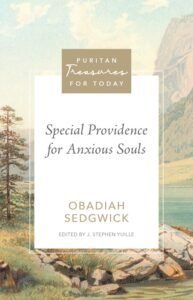
Special Providence for Anxious Souls (Sedgwick)
Worry, anxiety, and fear are well-known to anyone who desires to please God in the midst of our sin-cursed world. How can we know that the trials we face are working together for good?This book reminds us how God’s makes everything work for His glory and our highest good; so that we can receive comfort from the hand of God in every aspect of our lives.
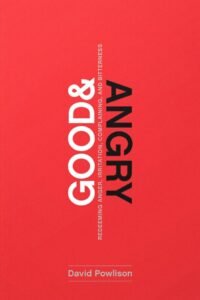
Good and Angry: Redeeming Anger, Irritation, Complaining, and Bitterness (Powlison)
Good and Angry, a groundbreaking book from David Powlison, shows readers how anger is more than a problem to solve. Anger is our complex human response to what we perceive as wrong in a complex world, thus we must learn how to fruitfully and honestly deal with it.
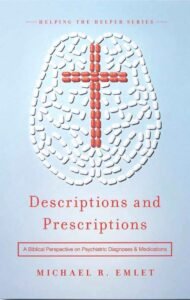
Descriptions and Prescriptions: A Biblical Perspective on Psychiatric Diagnoses and Medications (Emlet)
OCD, ADHD, PTSD, Bipolar Disorder . . . these are no longer just technical terms and medical diagnoses, they are part of our common vocabulary and culture. As Christians, we shouldn’t isolate ourselves from this discussion or dismiss these important issues. But we also should be careful not to accept the entire secular psychiatric diagnostic and treatment enterprise without question. What we need is a balanced, biblically (and scientifically) informed approach that neither blindly accepts nor harshly dismisses psychiatric labels, diagnoses, and medicines that are prescribed to help those who are suffering.
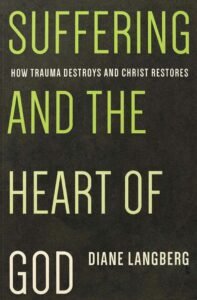
Suffering and the Heart of God: How Trauma Destroys and Christ Restores (Langberg)
After forty years of counseling abuse survivors around the world, Dr. Diane Langberg, a world renowned trauma expert, remains certain that what trauma destroys, Christ can and does restore. This book will convince you, too, of the healing heart of God. But it’s not a fast process, instead much patience is required from family, friends, and counselors as they wisely and respectfully help victims unpack their traumatic suffering through talking, tears, and time. And it’s not a process that can be separated from the work of God in both a counselor and counselee.
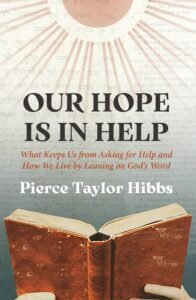
Our Hope Is In Help: What Keeps Us from Asking for Help and How We Live by Leaning on God's Word (Hibbs)
In a culture obsessed with self-reliance, Pierce Taylor Hibbs reveals a profound truth: our greatest strength lies not in standing alone, but in learning to lean. Drawing from biblical narratives and personal insights, Our Hope Is in Help exposes autonomy as the dangerous ghost haunting modern life―the stubborn belief that we can “go it alone.” Through the stories of Abraham’s deception, Moses’ rebellion, and David’s tragic fall, Hibbs unveils autonomy’s destructive anatomy: blindness, reductionism, control, mastery, and ultimately, self-idolatry.
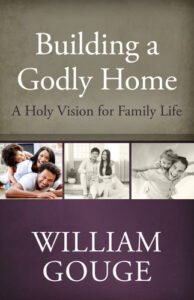
Building a Godly Home, Volume 1: A Holy Vision for Family Life (Gouge)
Puritan William Gouge’s treatment of Christian family life. In the first volume, the voice of a wise and loving mentor calls us to the old paths laid out for the family in the Bible. This is an exposition of Ephesians 5:21–6:4, spanning the voluntary submission, sacrificial love, obedient honor, and nurturing leadership.
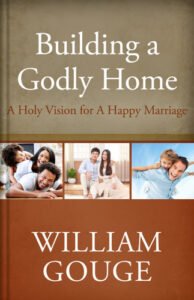
Building a Godly Home, Volume 2: A Holy Vision for a Happy Marriage (Gouge)
In the second volume, we find detailed counsel about the most important relationship in the family—husband and wife. Gouge carefully addresses what a fit marriage is and the proper way to enter into one. He then discusses the mutual duties married couples share in order for marriage to survive and thrive, as well as the duties specific to men and women respectively.
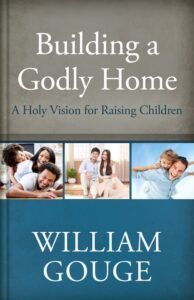
Building a Godly Home, Volume 3: A Holy Vision for Raising Children (Gouge)
In the third volume, Gouge offers wise and practical advice to both children and parents on how to relate to each other with love and honor. Drawing from a wealth of biblical principles and examples, he fleshes out how a household of affectionate authority provides for children and prepares them to live as God’s servants in the world.
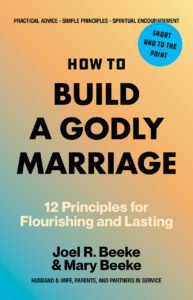
How to Build a Godly Marriage: 12 Principles for Flourishing and Lasting (Beeke & Beeke)
Drawing on decades of pastoral and counseling experience, Joel and Mary Beeke offer twelve clear, biblical principles that strengthen love, deepen communication, and restore hope. Whether your marriage feels solid or strained, this short guide will help you pursue God’s glory together and increase your joy in the covenant you share.
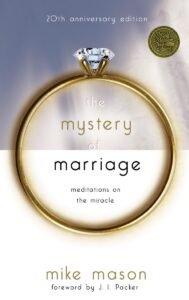
The Mystery of Marriage 20th Anniversary Edition: Meditations on the Miracle (Mason)
Mike Mason goes on a poetic search to understand the wondrous dynamics of committed love. In highly readable, first-person style, Mason’s writing stimulates readers’ thoughts and prayers and propels couples to deeper intimacy. “A marriage is not a joining of two worlds,” says the author, “but an abandoning of two worlds in order that one new one might be formed.”
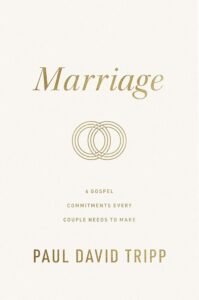
Marriage: 6 Gospel Commitments Every Couple Needs to Make (Tripp)
Paul David Tripp encourages couples to make 6 commitments to one another; commitments such as practicing forgiveness, appreciating differences, and actively working toward a relationship that is built on trust. Through each chapter, Tripp encourages readers to be motivated by grace as they strive to make Jesus Christ the center of their marriages.
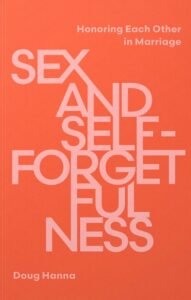
Sex and Self-Forgetfulness: Honoring Each Other in Marriage (Hanna)
Intimacy is a wonderful gift from God meant to draw married couples closer, but in a world where there is so much confusion and misuse of sexuality, how can that happen? Doug Hanna shares that the secret to the Christian life—where you find true life by laying down your life for others—is also the secret to mutually satisfying intimacy. Couples will explore Scripture together to discover that real joy comes from thinking less of yourself and more of your spouse.
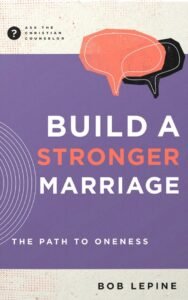
Build a Stronger Marriage: The Path to Oneness (Lepine)
All marriages face seasons of distress and frustration—times when, thanks to a variety of factors, you don’t feel as close as you once were. Lepine helps you make the adjustments necessary to build the kind of marriage God intends for you to have and encourages you back on the path to oneness.
Books Published by ICCCED-T
A fundamental aspect of our work as a 501(c)(3) research institution is the production of new contributions to the Christian literature. It is an honor to author and publish books on how God’s truth is not only relevant, but necessary for contemporary life. This is God’s mission for the Institute of Christ-Conforming Conjoint Education, Discipleship & Therapy, and we invite you to grab a chair and sit with us.
We see all our understandings as works in progress, and we welcome your direct feedback to improve subsequent editions. Read, enjoy, and email us your reactions!
Reviewers: Reach out to us if you wish to receive a copy for review and/or endorsement.
Donors: Reach out if you wish to receive any book as a token of our appreciation!
Therapeutic Curiosity, Volume I
Exploring ...
Matters of the Heart
Journal
This is not only an anthology of verses. Nor is it only a streamlined set of psychological questionnaires. It is both!
Dive headfirst into ten poems of “Mr. E.” representing the prototypical child/adolescent or young adult counselee. He may rarely open up in the counseling chair (or at home) and is still enigmatic even when offering a few choice words. But each poem is followed by a handful of questions designed to probe into the heart of the matter—unraveling the mystery of young love.
Whether you are a romantic-at-heart who values “more emotion packed into less words” as priceless, or a clinician who gladly gives “a 20th century penny for a thought” from a resistant patient, or two parents who just want a better read on their child, these slim pocket chapbooks will help you appreciate a person’s most tender experiences while learning how to cultivate their insight.
Discovering ...
Matters of the Heart
Workbook
This is not only an anthology of verses. Nor is it only a streamlined set of psychological questionnaires. It is both!
Dive headfirst into ten poems of “Mr. E.” representing the prototypical child/adolescent or young adult counselee. He may rarely open up in the counseling chair (or at home) and is still enigmatic even when offering a few choice words. But each poem is followed by a handful of questions designed to probe into the heart of the matter—unraveling the mystery of young love.
Whether you are a romantic-at-heart who values “more emotion packed into less words” as priceless, or a clinician who gladly gives “a 20th century penny for a thought” from a resistant patient, or two parents who just want a better read on their child, these slim pocket chapbooks will help you appreciate a person’s most tender experiences while learning how to cultivate their insight.
Treating ...
Matters of the Heart
Guide
This is not only an anthology of verses. Nor is it only a streamlined set of psychological questionnaires. It is both!
Dive headfirst into ten poems of “Mr. E.” representing the prototypical child/adolescent or young adult counselee. He may rarely open up in the counseling chair (or at home) and is still enigmatic even when offering a few choice words. But each poem is followed by a handful of questions designed to probe into the heart of the matter—unraveling the mystery of young love.
Whether you are a romantic-at-heart who values “more emotion packed into less words” as priceless, or a clinician who gladly gives “a 20th century penny for a thought” from a resistant patient, or two parents who just want a better read on their child, these slim pocket chapbooks will help you appreciate a person’s most tender experiences while learning how to cultivate their insight.
Therapeutic Curiosity, Volume II
Exploring
Matters of Loss & Life
Journal
This is not only an anthology of verses. Nor is it only a streamlined set of psychological questionnaires. It is both!
Dive headfirst into ten poems of “Mr. E.” representing the prototypical child/adolescent or young adult counselee. He may rarely open up in the counseling chair (or at home) and is still enigmatic even when offering a few choice words. But each poem is followed by a handful of questions designed to probe into the heart of the matter—unraveling the mystery of young love.
Whether you are a romantic-at-heart who values “more emotion packed into less words” as priceless, or a clinician who gladly gives “a 20th century penny for a thought” from a resistant patient, or two parents who just want a better read on their child, these slim pocket chapbooks will help you appreciate a person’s most tender experiences while learning how to cultivate their insight.
Discovering...
Matters of Loss & Life
Workbook
This is not only an anthology of verses. Nor is it only a streamlined set of psychological questionnaires. It is both!
Dive headfirst into ten poems of “Mr. E.” representing the prototypical child/adolescent or young adult counselee. He may rarely open up in the counseling chair (or at home) and is still enigmatic even when offering a few choice words. But each poem is followed by a handful of questions designed to probe into the heart of the matter—unraveling the mystery of young love.
Whether you are a romantic-at-heart who values “more emotion packed into less words” as priceless, or a clinician who gladly gives “a 20th century penny for a thought” from a resistant patient, or two parents who just want a better read on their child, these slim pocket chapbooks will help you appreciate a person’s most tender experiences while learning how to cultivate their insight.
Treating...
Matters of Loss & Life
Guide
This is not only an anthology of verses. Nor is it only a streamlined set of psychological questionnaires. It is both!
Dive headfirst into ten poems of “Mr. E.” representing the prototypical child/adolescent or young adult counselee. He may rarely open up in the counseling chair (or at home) and is still enigmatic even when offering a few choice words. But each poem is followed by a handful of questions designed to probe into the heart of the matter—unraveling the mystery of young love.
Whether you are a romantic-at-heart who values “more emotion packed into less words” as priceless, or a clinician who gladly gives “a 20th century penny for a thought” from a resistant patient, or two parents who just want a better read on their child, these slim pocket chapbooks will help you appreciate a person’s most tender experiences while learning how to cultivate their insight.